
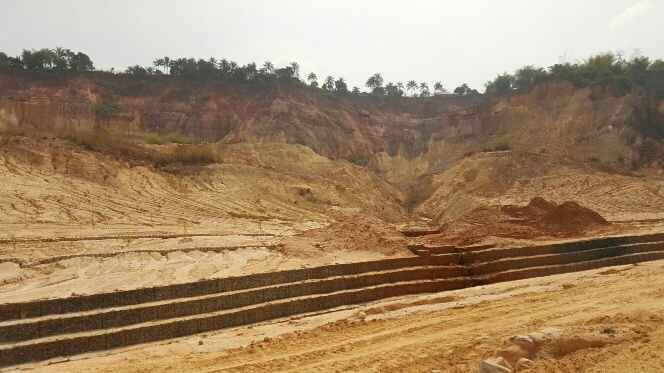
What Is Gully Erosion
Gully erosion is an advanced form of land degradation in which surface runoff concentrates into channels that deepen and widen over time, cutting through soil, farmland, roads, and settlements. Once initiated, gullies expand rapidly during heavy rainfall, making them difficult to stop without engineered intervention. In southeastern Nigeria, highly erodible soils, intense rainfall, and human land-use pressure accelerate this process, turning seasonal runoff into permanent landscape destruction.
Primary Causes of Gully Erosion
Gully erosion in communities such as Nanka and Orumba is driven by cumulative human activity interacting with fragile terrain:
- Removal of vegetation through farming, logging, and construction
- Deforestation and loss of tree cover that once stabilised soil
- Inappropriate farming practices, including lack of crop rotation and contour-ignorant planting
- Overgrazing and excessive land use
- Uncontrolled housing development and road construction
- Diversion of surface runoff into poorly designed or defective drainage channels
- Quarrying and borrow pits along highways
- Population growth increasing pressure on limited land resources
These factors concentrate rainfall into destructive flows rather than allowing gradual absorption into the soil.
Impacts on Communities
The effects of gully erosion are cumulative and often irreversible:
- Destruction of forests and natural vegetation
- Removal of fertile agricultural topsoil, rendering land unusable
- Loss of farmland, economic trees, and food security
- Structural collapse of homes and community buildings
- Permanent loss of ancestral land and property
- Displacement of families and erosion-related deaths
- Reduction of already limited land resources
In Nanka alone, studies projected the imminent loss of approximately 50 homes, equating to over 23,000 square metres of land. Comparable patterns are visible across Anambra State.
What Help Is Needed
Gully erosion cannot be solved through awareness alone. It requires intervention at multiple levels:
- Engineering solutions: properly designed drainage systems, check dams, slope stabilisation, and runoff control
- Environmental restoration: revegetation, tree planting, and soil reinforcement
- Planning enforcement: regulation of construction, quarrying, and road runoff
- Government action: state and federal funding, geological assessment, and long-term maintenance
- Documentation and accountability: mapping, monitoring, and public reporting to prevent neglect
Without coordinated action, the land will continue to erode, swallowing the ancestral homes built upon it.
Source: Enemuoh et al. (2012), Causes and Impacts of Gully Erosion in Nanka, Anambra State